



You are currently viewing Top 8 Employee Appraisal Methods Every Manager Should Know

Top 8 Employee Appraisal Methods Every Manager Should Know

Are you confident in your employee evaluation process? Do you find it challenging to give feedback that truly motivates your team? Employee appraisal methods can transform how you assess and develop your workforce. Knowing the right techniques is essential for every manager who wants to build a high-performing, engaged team. In this blog, you’ll learn the top 8 employee appraisal methods that simplify the performance appraisal and help you conduct effective employee appraisals that drive real growth.

Why Employee Appraisals Matter

Employee appraisals are more than just annual reviews. They’re crucial moments to recognize achievements, address challenges, and set the course for future success. Here are five reasons why mastering the employee evaluation process matters:

  1. Boosts Employee Motivation – When you use the right employee appraisal methods, your team feels valued and motivated. Clear feedback and recognition inspire employees to perform better, improving overall productivity.
  1. Identifies Strengths and Weaknesses – Performance appraisals help you spot individual strengths and areas for improvement. This insight allows you to tailor development plans and training, enhancing your team’s skills efficiently.
  1. Aligns Employee Goals with Business Objectives – A structured employee appraisal process connects personal goals with company vision. This alignment increases focus and ensures everyone contributes to your business’s success.
  1. Improves Communication – Employee appraisals open up two-way conversations between you and your team. This transparency builds trust, resolves conflicts early, and encourages ongoing feedback.
  1. Supports Career Growth and Retention – Regular, fair appraisals show your commitment to employee growth. When people see opportunities for advancement, they stay loyal and engaged, reducing costly turnover.

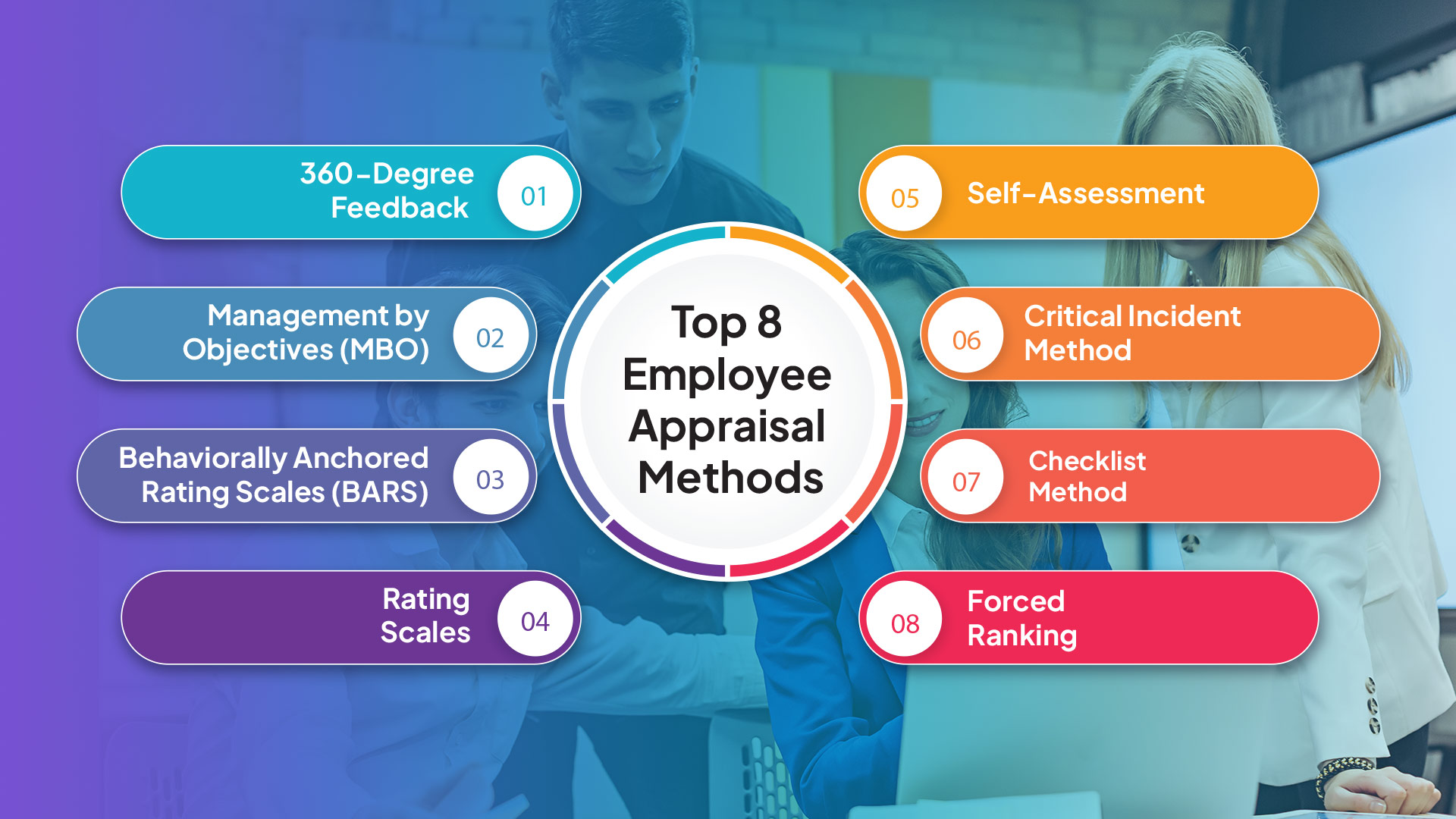
Top 8 Employee Appraisal Methods

1. 360-Degree Feedback

360-degree feedback is one of the most comprehensive employee appraisal methods. It gathers input from peers, supervisors, subordinates, and sometimes even clients to provide a full picture of an employee’s performance. This method reduces bias by involving multiple perspectives and highlights strengths and areas for improvement that a single evaluator might miss. It encourages open communication and trust within teams. Using 360-degree feedback in your employee evaluation process ensures a balanced, fair assessment and helps managers make more informed decisions. This method is especially useful when learning how to conduct an effective employee appraisal that promotes growth.

2. Management by Objectives (MBO)

Management by Objectives (MBO) is a goal-driven appraisal method focusing on setting clear, measurable objectives between managers and employees. These targets align individual performance with overall company goals, making performance appraisals more relevant and results-oriented. During the employee evaluation process, progress toward these objectives is regularly reviewed, allowing for adjustments and discussions about challenges. MBO encourages accountability and motivates employees to meet or exceed expectations. This employee appraisal method is ideal for managers looking for structured, outcome-based reviews that support both individual growth and business success.

3. Behaviorally Anchored Rating Scales (BARS)

Behaviorally Anchored Rating Scales (BARS) combine qualitative and quantitative assessment by rating employees based on specific behaviors linked to performance levels. This employee appraisal method minimizes subjectivity by providing concrete examples of expected behaviors at each rating level. BARS helps managers clearly communicate performance standards and gives employees actionable feedback. It also ensures consistency across evaluations, making the employee evaluation process fairer. By using BARS, you create an effective employee appraisal environment where behaviors are directly connected to outcomes, improving clarity and motivation for your team.

4. Rating Scales

Rating scales are among the simplest employee appraisal methods, where employees are scored on various performance criteria using numeric or descriptive scales (e.g., 1-5 or poor to excellent). This straightforward approach allows managers to quickly evaluate multiple competencies like teamwork, punctuality, or technical skills. Though easy to use, rating scales work best combined with detailed feedback to avoid oversimplification. This method is common in performance appraisals because it provides a clear snapshot of strengths and weaknesses, helping you identify areas that need development and how to conduct an effective employee appraisal.

5. Self-Assessment

Self-assessment empowers employees to evaluate their own performance as part of the appraisal process. This employee appraisal method encourages reflection and honesty, helping employees take ownership of their strengths and weaknesses. It also opens a dialogue between manager and employee, providing valuable insights into personal goals, challenges, and achievements that may not be visible otherwise. Incorporating self-assessment into your employee evaluation process makes appraisals more participatory and developmental, fostering a culture of continuous improvement and transparency.

6. Critical Incident Method

The critical incident method focuses on identifying specific instances of particularly effective or ineffective employee behavior during the appraisal period. Managers document these key events, positive or negative, which then form the basis of the employee evaluation process. This method makes performance appraisal more objective and fact-based rather than relying on general impressions. By highlighting real examples, it helps you provide concrete feedback and supports how to conduct an effective employee appraisal that drives meaningful change and development.

7. Checklist Method

The checklist method uses a list of traits, skills, or behaviors that managers check off based on employee performance. This employee appraisal method simplifies the evaluation process and ensures all important areas are reviewed consistently. While it’s easy to implement, the checklist method works best when combined with qualitative comments to avoid overly mechanical reviews. In your employee evaluation process, using checklists can improve efficiency and provide a structured framework, especially helpful when managing large teams or conducting frequent appraisals.

8. Forced Ranking

Forced ranking, also called “stack ranking,” requires managers to rank employees against each other, categorizing them into top, average, and low performers. This method encourages competition and helps identify high achievers and those needing improvement. However, it can create a stressful environment and may not suit every company culture. As an employee appraisal method, forced ranking provides clear differentiation but should be used carefully to avoid damaging morale. Understanding how to conduct an effective employee appraisal with forced ranking involves balancing fairness with performance management goals.

Conclusion

Mastering employee appraisal methods helps you conduct fair, motivating, and productive performance appraisals. By choosing the right approach, you improve your employee evaluation process, encourage growth, and align your team with company goals. Start applying these methods today and watch your team thrive.

At 10X Hiring, a leading recruitment agency in India, our mission is to revolutionize the recruitment landscape and make the hiring process smoother for you. We pride ourselves on being your trusted partner in building a team of top-tier professionals. Specializing in Design hiring, we bring a unique and specialized approach to help you find the best-fit candidates aligned with your vision. Whether you’re a start-up, an established company, or need support recruiting key hires, 10X Hiring offers tailored recruitment and staffing solutions designed to help your business grow with the right talent.

Frequently Asked Questions (FAQs)

1. What is an employee appraisal?

An employee appraisal is a formal review process where a manager evaluates an employee’s performance, achievements, and areas for improvement. It helps track progress, set goals, and provide feedback to support professional development and organizational growth.

Be specific, focus on behaviors (not personalities), and use real examples. Balance positives with areas for growth, and offer actionable suggestions. Encourage dialogue to understand their perspective and end with clear steps for improvement and future development.

Employee appraisals boost motivation, clarify expectations, and align individual goals with business objectives. They also identify training needs, support career growth, and improve performance, leading to higher productivity and employee retention across the organization.

Include performance achievements, goals met, strengths, areas for improvement, training needs, and future objectives. Also document feedback, ratings (if applicable), and an action plan. Keep the process clear, objective, and focused on professional growth.

Appraisals are typically conducted annually or bi-annually, but more frequent check-ins—like quarterly or monthly reviews—can improve feedback quality and engagement. Regular reviews ensure timely guidance, quicker course correction, and stronger employee development.

Search