

You are currently viewing Digital Marketing Internship Guide to Get Hired in 2026
digital marketing internship guide.

Digital Marketing Internship Guide to Get Hired in 2026

The Internship Nobody Tells You About

Here is something most career guides skip over: the digital marketing internship you land in 2026 will not look like the ones from five years ago. Platforms have changed. Algorithms have changed. The skills companies actually need from interns have shifted — and if you walk in with a 2020 mindset, you will struggle to stand out.

The good news is that digital marketing remains one of the most accessible industries for freshers. You do not need a specific degree. You do not need a long résumé. What you do need is a genuine understanding of how brands grow online, a working knowledge of the key tools, and the ability to show — not just tell — what you can do.

This digital marketing internship guide will walk you through exactly what companies are looking for in 2026, how to prepare yourself before you even apply, and what to do once you land the role so it actually converts into a full-time opportunity.

What Digital Marketing Internships Actually Involve in 2026

internship

Before diving into how to get hired, it helps to understand what you are signing up for. Many students apply for marketing internships without a clear picture of the day-to-day work — and that mismatch shows in interviews.
Digital marketing roles at the intern level typically involve a mix of the following:
Content and Copywriting Support Writing captions, blog drafts, email sequences, or ad copy. Even if writing is not your primary strength, basic content skills are expected across almost every marketing team.
Social Media Management Scheduling posts, monitoring engagement, responding to comments, and compiling weekly performance reports. This sounds simple — but doing it strategically, with an understanding of platform algorithms and audience behavior, is what separates a good intern from a forgettable one.
SEO and Website Basics Keyword research, on-page optimization, and basic content audits are increasingly common intern responsibilities. Tools like Google Search Console, Semrush, and Ahrefs are regularly introduced to interns at even mid-sized companies.
Paid Advertising Assistance Running or monitoring Google Ads or Meta Ads campaigns under supervision. Budget management, A/B testing creatives, and reading campaign data are skills that make interns immediately useful.
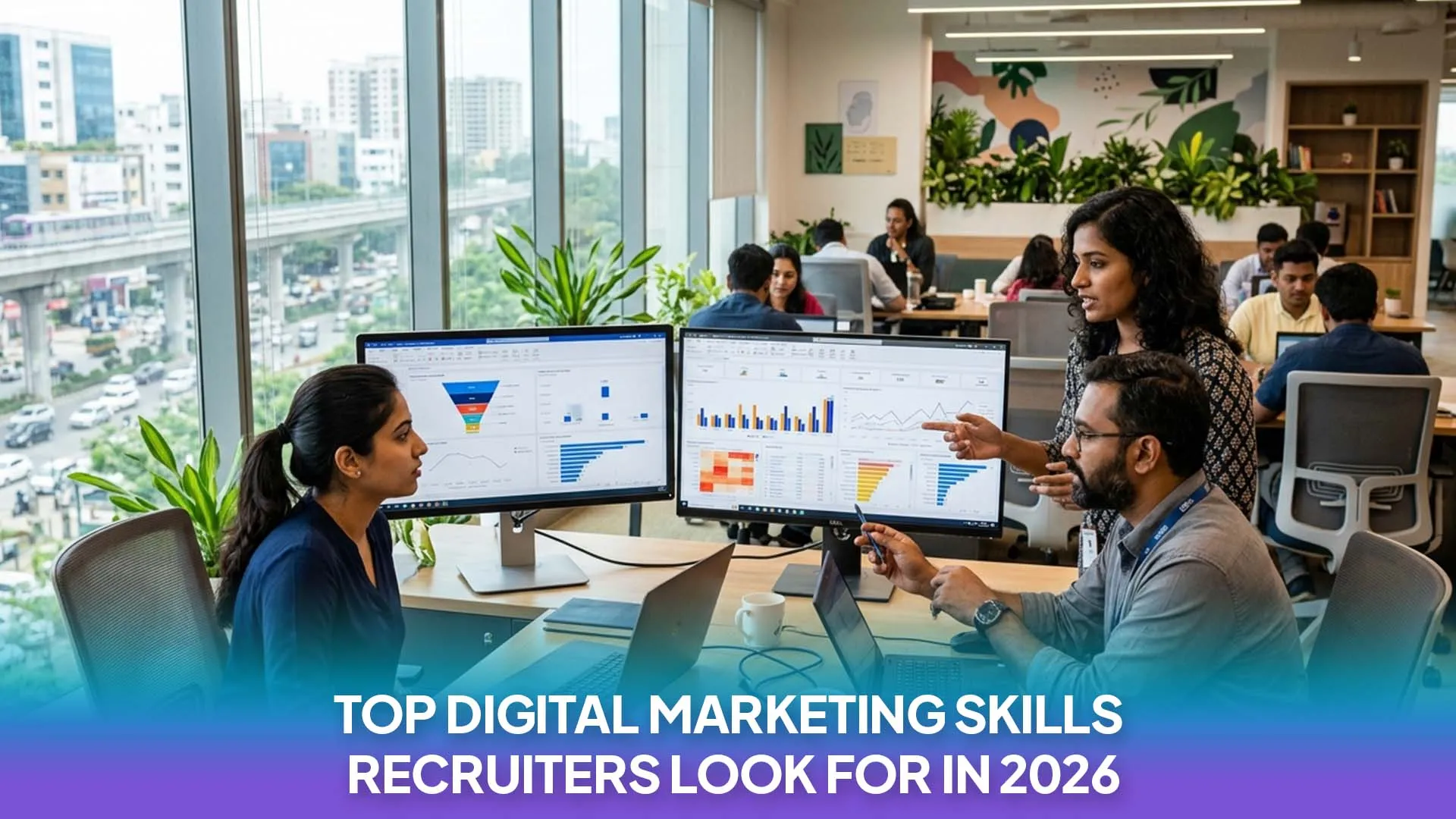
Analytics and Reporting Pulling data from Google Analytics 4, compiling reports, and translating numbers into actionable insights. Data literacy is the single most in-demand skill in digital marketing right now, and interns who can work with it confidently stand out immediately.

Online Marketing Skills You Need Before Applying

Internship tips come in all shapes, but the most practical one is this: do not wait for an internship to learn — learn before you apply. Companies in 2026 are not looking to teach interns what digital marketing is. They want people who already understand the basics and are ready to contribute from week one.

Here are the online marketing skills worth building before your first application:

Google Analytics 4 (GA4)  

GA4 is now the industry standard. Learn how to navigate the dashboard, set up events, and read audience and acquisition reports. Free resources on Google’s own Skillshop cover this thoroughly.

SEO Fundamentals  

Understand how search engines work, the difference between on-page and off-page SEO, and how to do basic keyword research. Practice by optimizing a blog or a free website you build for yourself.

Meta Ads and Google Ads Basics  

You do not need to run live campaigns with real budget — but understanding campaign structure, targeting options, bidding strategies, and ad formats is enough to speak confidently in an interview.

Email Marketing  

Platforms like Mailchimp or HubSpot have free tiers. Build a basic email sequence for a fictional brand to understand segmentation, open rates, and campaign logic.

Canva and Content Creation Tools  

Visual content is part of every digital marketer’s toolkit. Knowing how to produce clean, on-brand graphics quickly is a practical skill that saves teams real time.

Basic Excel or Google Sheets  

Data sorting, pivot tables, and VLOOKUP are used regularly in marketing reporting. Comfortable spreadsheet skills will make you more valuable than most of your peers.

Pair any two or three of these with a free certification — Google, HubSpot, Meta Blueprint, and Semrush all offer recognized credentials — and your application immediately looks more prepared than the average student submission.

How to Find Marketing Internships for Students in 2026

Knowing where to look saves a lot of wasted effort. These are the most reliable channels for finding legitimate marketing internships for students right now:

LinkedIn remains the most powerful job discovery tool for marketing roles. Keep your profile updated with skills, any freelance or project work, and certifications. Recruiters actively search for intern candidates here.

Internshala and Unstop are widely used platforms in the Indian market for fresher marketing jobs, offering both paid and unpaid opportunities across cities and remote setups.

Company Career Pages — especially at startups and D2C brands — often post internship openings before they hit job boards. Follow brands you admire and check their careers section regularly.

Cold Outreach should not be underestimated. A well-written LinkedIn message or email to a marketing manager at a brand you respect — explaining who you are, what you can offer, and why you are interested in their work — has a higher conversion rate than most students expect.

College Placement Cells and Alumni Networks are underused resources. A warm introduction through someone who already works at a company is worth ten cold applications.

Internship Tips for Turning a Role Into a Job Offer

Getting the internship is step one. Making it count is step two — and this is where most students leave value on the table.

Show up with initiative. Do not wait to be assigned every task. Identify something that could be improved — a social media posting gap, an underperforming email subject line, a blog that has not been updated in months — and bring it up with a proposed solution.

Document your work obsessively. Keep records of every campaign you touch, every report you compile, every piece of content you publish. Numbers matter. “Increased Instagram engagement by 18% over six weeks” is a résumé line. “Helped with social media” is forgettable.

Build internal relationships  The person who recommends you for a full-time role is rarely your direct manager — it is often someone you helped informally, collaborated with on a project, or impressed in a team meeting. Be genuinely useful to people across the team.

Ask for feedback halfway through, not just at the end. Mid-internship feedback gives you time to course-correct and shows a level of self-awareness that managers remember.

Be vocal about your interest in staying. Do not assume they know you want a full-time role. Have a direct conversation with your manager in your final weeks. Companies prefer to hire known, trained people over starting a new search.

Building a Personal Brand Before You Apply

One thing that increasingly separates candidates in 2026 is a visible digital presence. You are applying for a digital marketing role — your online presence is part of your portfolio whether you intend it to be or not.

You do not need a huge following. You need a credible one. Consider:

  • Writing 4 to 6 LinkedIn posts about marketing observations, campaigns you found interesting, or things you have learned from certifications

  • Starting a basic newsletter or blog on a niche topic — even 10 solid posts show consistency and communication skills

  • Creating a simple portfolio page that collects your certifications, mock campaign work, and any freelance or college projects

When a recruiter Googles your name and finds nothing — or worse, finds a dormant LinkedIn with no photo and no activity — it creates a question mark. When they find a LinkedIn with thoughtful posts and a link to your work, that question mark disappears.

Frequently Asked Questions (FAQs)

What qualifications do I need to apply for a digital marketing internship as a fresher?

No specific degree is required for most digital marketing internships. What matters more is demonstrable knowledge — certifications from Google, HubSpot, or Meta Blueprint, a basic understanding of SEO and social media, and any hands-on work you have done, even if self-initiated. A simple project showing a mock campaign, content calendar, or keyword research exercise goes further than a transcript.

Most digital marketing internships run between 2 to 6 months. Startups often offer shorter, project-based stints of 8 to 12 weeks, while larger companies may run structured internship programs lasting up to 6 months. Some internships convert into full-time fresher marketing jobs upon completion, particularly when you perform well and express interest in staying.

Yes — remote digital marketing internships are widely available and have become the norm post-2020. Most of the tools used in digital marketing (Google Analytics, Meta Ads Manager, Canva, HubSpot, Slack, Notion) are fully cloud-based and built for distributed teams. Remote internships also broaden your options beyond your city, giving you access to companies and brands you would not find locally.

The scope and ownership level differ significantly. As an intern, you typically support ongoing work — running reports, scheduling content, assisting on campaigns. In a full-time digital marketing role, you own channels, manage budgets, set strategy, and are accountable for results. Internships are structured to give you exposure and context; full-time roles expect you to lead. The skills you build during an internship are precisely what prepares you for that ownership.

Research the standard stipend range for your city and role type before any conversation — in India, paid marketing internships for students typically range from ₹5,000 to ₹20,000 per month depending on company size and location. When asked about expectations, give a number confidently and briefly justify it with your skills or certifications. If the company cannot meet your number, consider whether the learning value, brand name, or conversion potential to a full-time role compensates for it.

Search