



You are currently viewing What is Human Resource Planning and Why Is It Crucial for Business Growth?

What is Human Resource Planning and Why Is It Crucial for Business Growth?

Have you ever wondered how different successful companies always seem to have the right people in the right place at the right time? This is where Human Resource Planning (HRP) comes in. It is the magic behind having a steady, prepared, and thriving workforce. 

Understanding what is Human resource planning will enable you to find the right employee for your business to achieve growth, stability, and success. In this guide, you’ll learn more about what is human resource planning, why it is important, and how you can get started with it. 

See Also: What is HRIS (Human Resource Information System)?

What is Human Resource Planning (HRP)?

What is Human Resource Planning? Human Resource Planning (HRP) is a strategic process where businesses anticipate and plan for their current and future workforce requirements. It’s about understanding your business objectives, aligning them with employee needs, and ensuring you’re always prepared for what’s ahead.

Think of HRP as your guide map to how you would assemble and sustain a capable, balanced, and effective workforce in your organization. It ranges from predicting the future demand for talent to guaranteeing the employees they already have, to getting the tools and training they need to thrive. 

But why is HRP so significant for businesses, and how can it drive growth? Let’s explore.

Importance of HRP for Business Growth

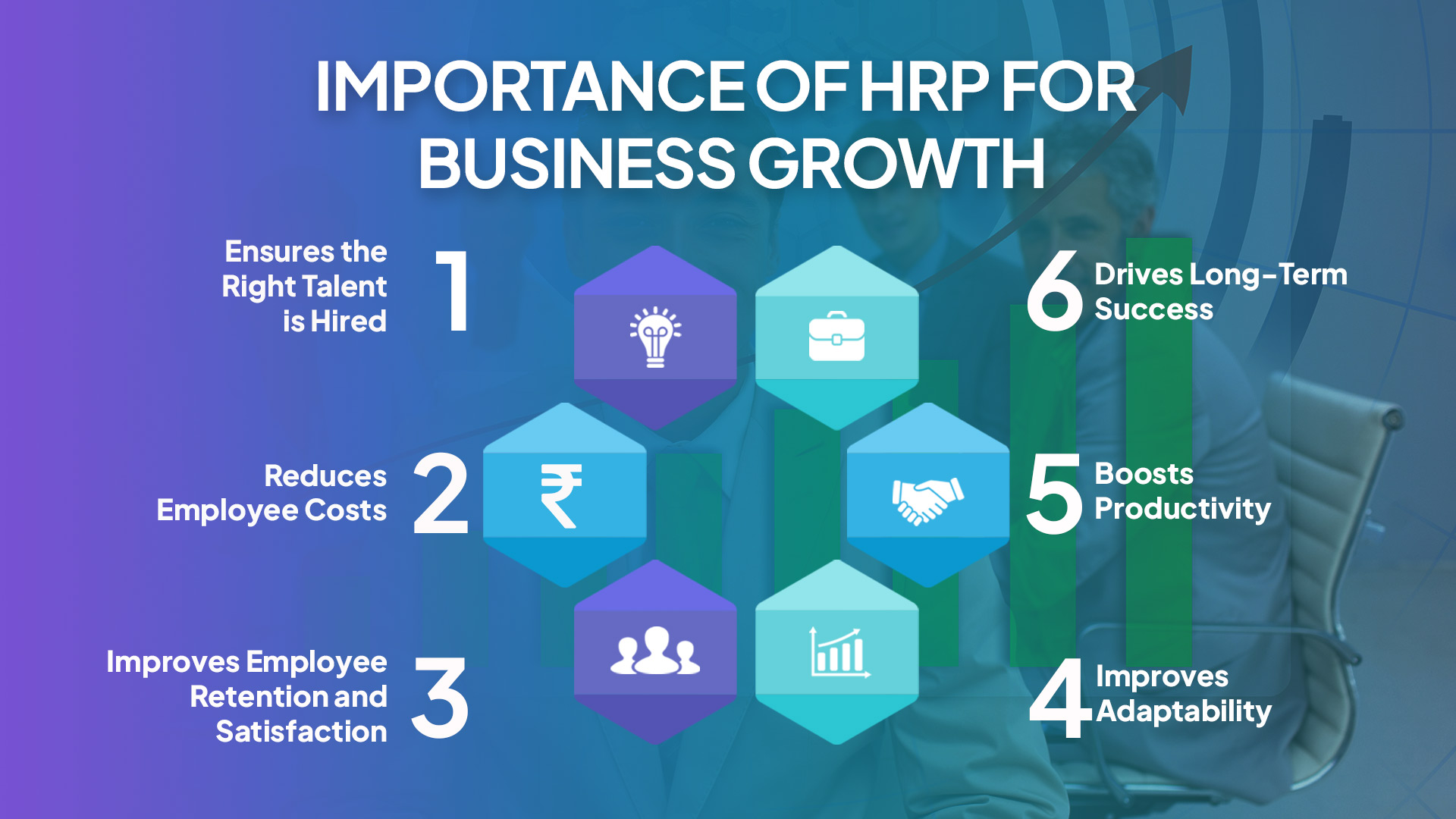
Here are six reasons why knowing what is human resource planning and implementing it effectively is pivotal for business success. 

  1. Ensures the Right Talent is Hired – HRP enables you to predict what your business is likely to require in terms of skills and positions in the future. This means that you can have well-off qualified candidates for employment, so there won’t be a time that your organization lacks the human resources it needs. 
  2. Reduces Employee Costs – By implementing the right kind of HRP, organizations can prevent cases of overstaffing or understaffing. This translates into cost savings because you will be speaking to effectiveness on how to use the available manpower and resources. 
  3. Improves Employee Retention and Satisfaction – This is because when employees have perceived organizational value they get committed, the organization establishes career advancement opportunities and the employees will remain. These lead to job satisfaction since HRP takes care of role clarity, training needs, and development plans of the employees. 
  4. Improves Adaptability – Open markets are dynamic and so are the expectations of the employees in the market. HRP means that a business can be ready for those changes in order to facilitate the workforce to respond to new opportunities or risks. 
  5. Boosts Productivity – The last external strategic HRM scan involves aligning workforce planning to business goals. By matching the people in the right place and arming them with the right training their productivity is sure to rise. 
  6. Drives Long-Term Success – Governments fulfill their mandate when they put the right people in charge of the economy. HRP guarantees that your organization does not operate on the edge but has a deliberate plan for managing its workforce for the future. Contact us, a leading recruitment agency in India to know more!

Steps in Effective Human Resource Planning

Now that you know what is human resource planning and why it matters, how do you start implementing it? Follow these six crucial steps. 

Step 1: Assessing the Environment

Begin by understanding both external and internal factors, like market trends, industry growth, and current employee skill sets. Having accurate data is key to making informed decisions. 

Used to get more insight into positions of competitors and industries for better understanding. Consult all stakeholders in an organization to have a better understanding of the operational difficulties and possible openings.

Step 2: Forecasting Labour Needs

Identify your business’s future requirements. Will you need new roles? More employees? Or perhaps different skills? Forecasting helps you adapt to these changes step by step. 

Consider technological advancements and how they might impact your workforce needs. Use predictive analytics to anticipate long-term trends and workforce dynamics.

See Also: What is Human Capital Management?

Step 3: Evaluating Labour Availability

Review your current workforce. Identify gaps, strengths, and potential areas for improvement. This step lays the groundwork for bridging talent shortages. 

Examine employee performance and retention rates to understand stability. Collaborate with managers to identify team-specific needs and challenges.

Step 4: Closing the Gaps

Develop strategies to ensure you’re fully staffed with the talent required. This could include hiring, upskilling existing employees, or even restructuring departments. 

Leverage recruitment tools and platforms to find the right talent quickly. Launch training programs to equip your existing workforce with in-demand skills. Contact us to get started with Recruitment process outsourcing in India today!

Step 5: Planning for Implementation

Create detailed roadmaps for executing your HR plan. Assign responsibilities, set budgets, and create timelines to make the implementation seamless. 

Incorporate contingency plans to address unexpected changes or delays. Communicate the plan clearly across all teams to ensure alignment and cooperation.

Step 6: Monitoring and Review

HRP is not a one-time initiative. Monitor the outcomes continuously and make adjustments as business needs or market conditions change. 

Use key performance indicators (KPIs) to measure success and track progress. Schedule regular reviews to refine strategies and stay ahead of workforce demands.

Tools and Techniques Used in Human Resource Planning

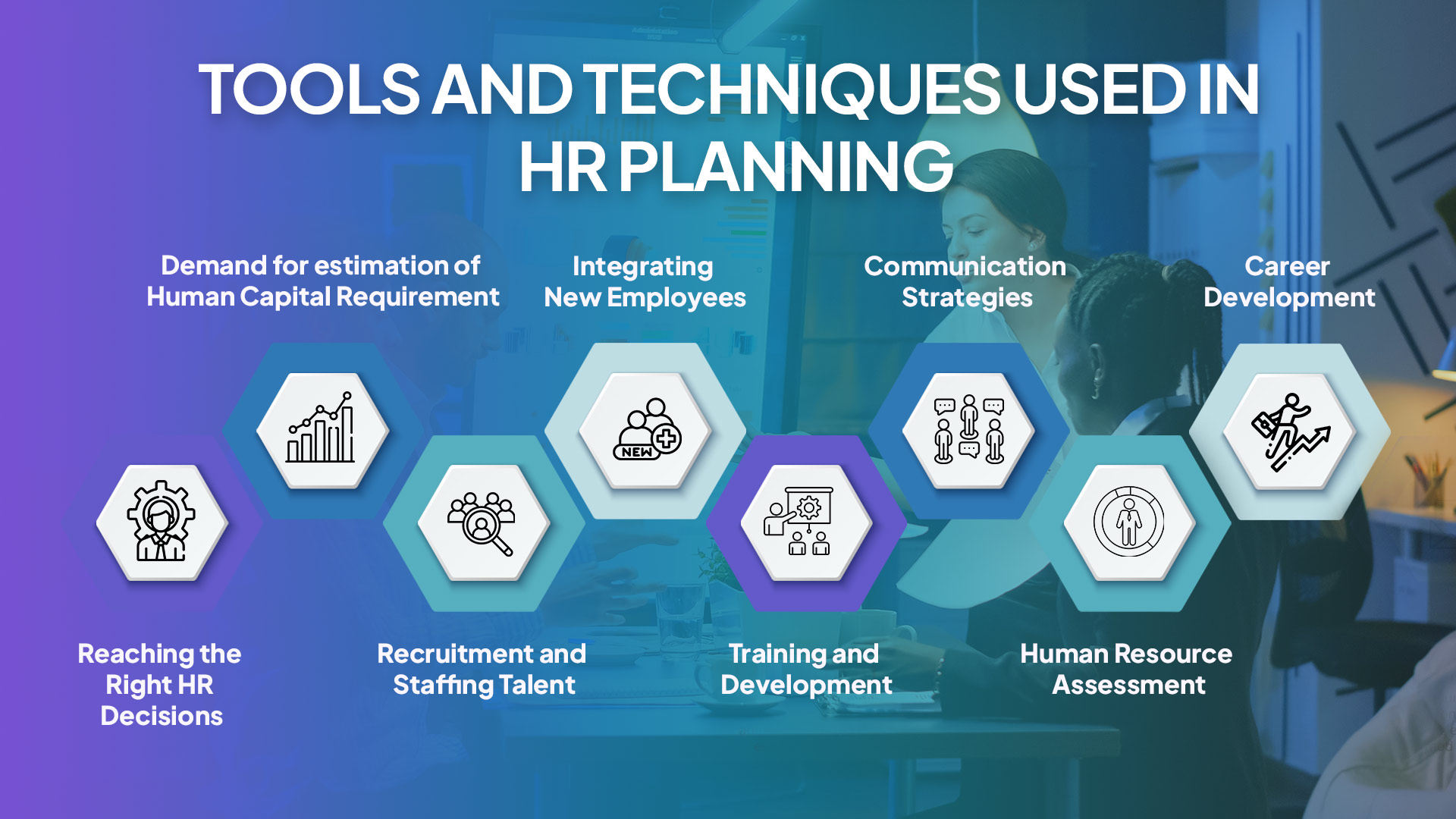
Implementing what is human resource planning effectively is easier with the right tools and techniques. Here are some key methods businesses rely on for success. 

  1. Reaching the Right Human Resource Decisions – There are such tools as workload analysis software which shows the number of required employees for certain work. Such observations help in planning and distribution of workload among the members of the work team. 
  2. Demand for estimation of Human Capital Requirement – Learn how to use data analysis platforms to forecast future trends in the workforce and the roles that they will encompass. This assists in keeping businesses as agile as possible in terms of meeting staffing needs. 
  3. Recruitment and Staffing Talent – Applicant tracking systems ATS reduce the process of searching and filtering out the appropriate candidates. They are time efficient since they remove all the usual hustle associated with the hiring process. 
  4. Integrating New Employees – Onboarding platforms provide a way to facilitate the transition of new employees into the organization. They are used in the assimilation of new employees into the company’s culture and the way it does business. 
  5. Training and Development – LMS can be used to enhance the skills of the employees through delivery of the training programs. This improves the productivity of any organization and also ensures the skills learned to meet the current market. 
  6. Communication Strategies – By adopting HR chatbots and other tools of employee communication, collaboration, and contentious issues can be well attended to and handled as well. These tools make it possible for employees to feel some form of support and feel informed. 
  7. Human Resource Assessment – Use performance management software to regularly assess employee performance and identify areas for improvement. Proposes solutions to the manager and the team members. 
  8. Career Development – Career pathing tools help one forward a progression plan to assist human asset directors in defining and executing career-line plans for employees, thus, aiding staff satisfaction and turnover. It encourages the employees to work towards meeting their career aspirations while in the company.

Build a Workforce That Drives Success with 10X Hiring

Defining what is human resource planning is not just an academic exercise—it is your blueprint for developing a strong, ready, and flexible working force. By following the above steps and using the right tool, business owners can be able to manage their business affairs to remain relevant in the current complex environment. 

But knowing the steps isn’t enough. Taking action is what sets great businesses apart. 

At 10X Hiring, a recruitment agency in India, our mission is to revolutionize the recruitment landscape and make the hiring process smoother for you. It is our great honor to accompany you in growing exceptional teams of top-tier professionals. When it comes to design hiring, our strategy is targeted and unique to your needs, to bring you the right candidate that will fit into the company’s vision and plan. 

Regardless of whether you are a young company only beginning to establish itself, a rapidly growing organization, or a company that needs to fill qualitatively important positions, we have developed recruitment and staffing services for every stage of your company’s evolution. This means that, when your team is strong, your business is unbeatable. 

Thinking about making the first change to your current hiring process? Contact us at 10X Hiring and let us skill up your business.


FAQs

Search

Human Resource Planning (HRP) refers to the process of forecasting an organization’s current and future workforce needs to meet its goals effectively. By understanding what human resource planning is, you can align your talent strategy with business objectives, ensuring the right people are in the right roles at the right time.

The steps in human resource planning include assessing the environment, forecasting labor needs, evaluating labor availability, identifying gaps, planning for implementation, and monitoring the results. Understanding these steps is vital when learning what is human resource planning and applying it effectively.

Examples of human resource planning include workforce expansion during business growth, succession planning for leadership roles, and hiring strategies for seasonal demands. Each of these showcases how human resource planning plays a key role in organizational success.

HRP is essential for ensuring that an organization has the workforce needed to achieve its goals while minimizing risks like talent shortages or overstaffing. When you delve into what is human resource planning, its importance becomes clear—it supports cost efficiency, employee satisfaction, and long-term business growth.