




You interviewed well. The candidate had the right tools on their CV, a decent portfolio and a calm answer for every question. Three months later, they’re gone, or you’re quietly wishing they were.
So what happened? Did you pick the wrong
person, or did something around them break? And if the next hire walks into the same setup, will the result be any different?
Most failed digital marketing hiring comes down to the setup, not the person. Here’s where it usually goes wrong, and what you can fix before the next offer goes out.
A job title is not a job
Dig up the last job ad you posted for a digital marketer. If it reads something like “SEO, paid ads, social, content, email, analytics,” you didn’t write a job. You wrote six of them. Sure, one person can dip a toe into each. But nobody’s going to be good at all six in their first three months.
This is where a lot of marketing hires quietly go wrong. The role is really a wish list, and in the interview the candidate says “yeah, I can do that” to everything, because who wouldn’t? Then ten days in, they find out they’re also running the ads, writing the blog, and untangling the website.
What works better is deciding what you actually need most. Maybe it’s more qualified inquiries. Maybe it’s more organic traffic. Pick one or two, and shape the role around them.
The same goes for seniority. If you ask a junior hire to come up with a strategy from nothing, they’ll struggle. If you hand a senior strategist no budget and no tools, they’ll burn out fast. So hire for the stage your business is really at, not for the title that sounds impressive.
Nobody said what “good” looks like
Here’s a quick test. Ask three people on your team what a good first 90 days looks like for the new marketing hire. If you get three different answers, you’ve got a problem, and it isn’t the hire. They’re going to guess what you want, and you’ll judge them on the guess.
So write it down. Keep it simple. Month one, they just learn: the product, the customers, whatever campaigns are already running. Month two, they poke around, find what’s broken, and fix the obvious stuff. Month three, they start trying things, and every test comes with a number. Nobody’s expecting a miracle by day 90, just proof things are moving.
Choose your numbers carefully, too. Likes and impressions are the easy ones. They go up, they look great in a report, and they tell you almost nothing. Leads, qualified inquiries, cost per lead? Those are harder to hit, but they’re what your business actually feels. Pick two or three and agree on them before the first day.
And give it time. SEO takes months. Ads need data before they settle down. Judge someone on 90-day revenue alone and you might let go of the person who was weeks away from getting it working.
Onboarding Stops at the Laptop
Day one: laptop, email, a chat invite. Day eight: still no access to the ad account, analytics or CRM. A marketer without data can’t do much except wait, and waiting looks like underperformance. That’s where a lot of digital marketing hiring quietly breaks down.
Sort the logins before the start date. Ad platforms, analytics, search console, the website backend, the CRM, the social pages. Introduce the new hire to sales and to whoever owns the budget. A good first week isn’t a welcome lunch. It’s access.
What This Looks Like in Practice
Picture a founder who hires a digital marketing manager in January to “bring in more leads”. The job post lists seven channels. There’s an ad budget, but nobody has shared the ad account. Sales isn’t recording where enquiries come from.
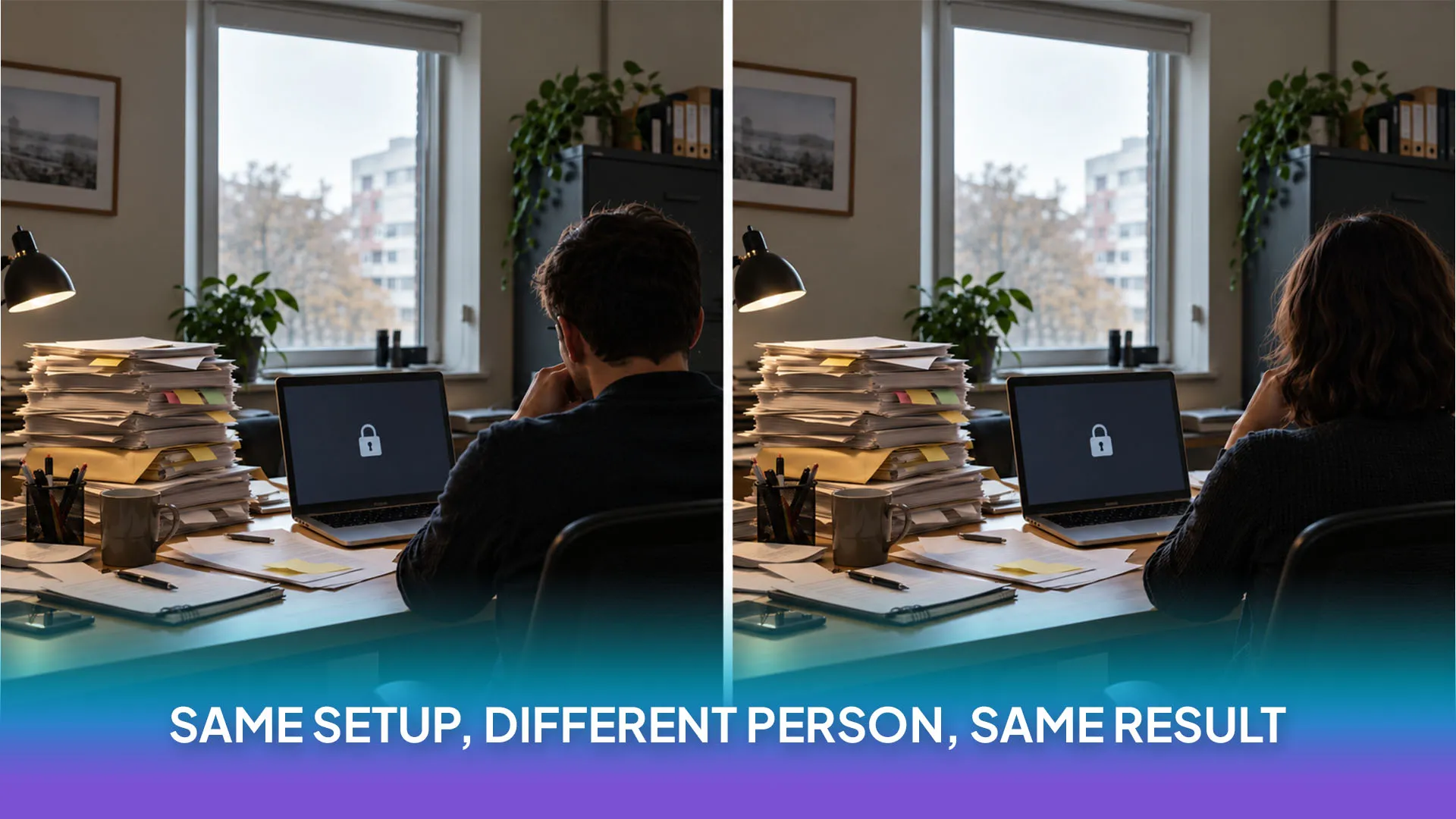
By March, the founder wants to know why leads haven’t grown. The marketer is asking for data. Everyone is right about their own side, and everyone’s frustrated. Swap the person and the same thing happens again.
That’s not a talent gap. It’s a hiring system gap, and you can fix it before the next candidate is even shortlisted.
You tested talking, not doing
Interviews reward people who explain things well. Marketing rewards people who get things done. Sometimes that’s the same person, and sometimes it isn’t, and that gap gets expensive fast.
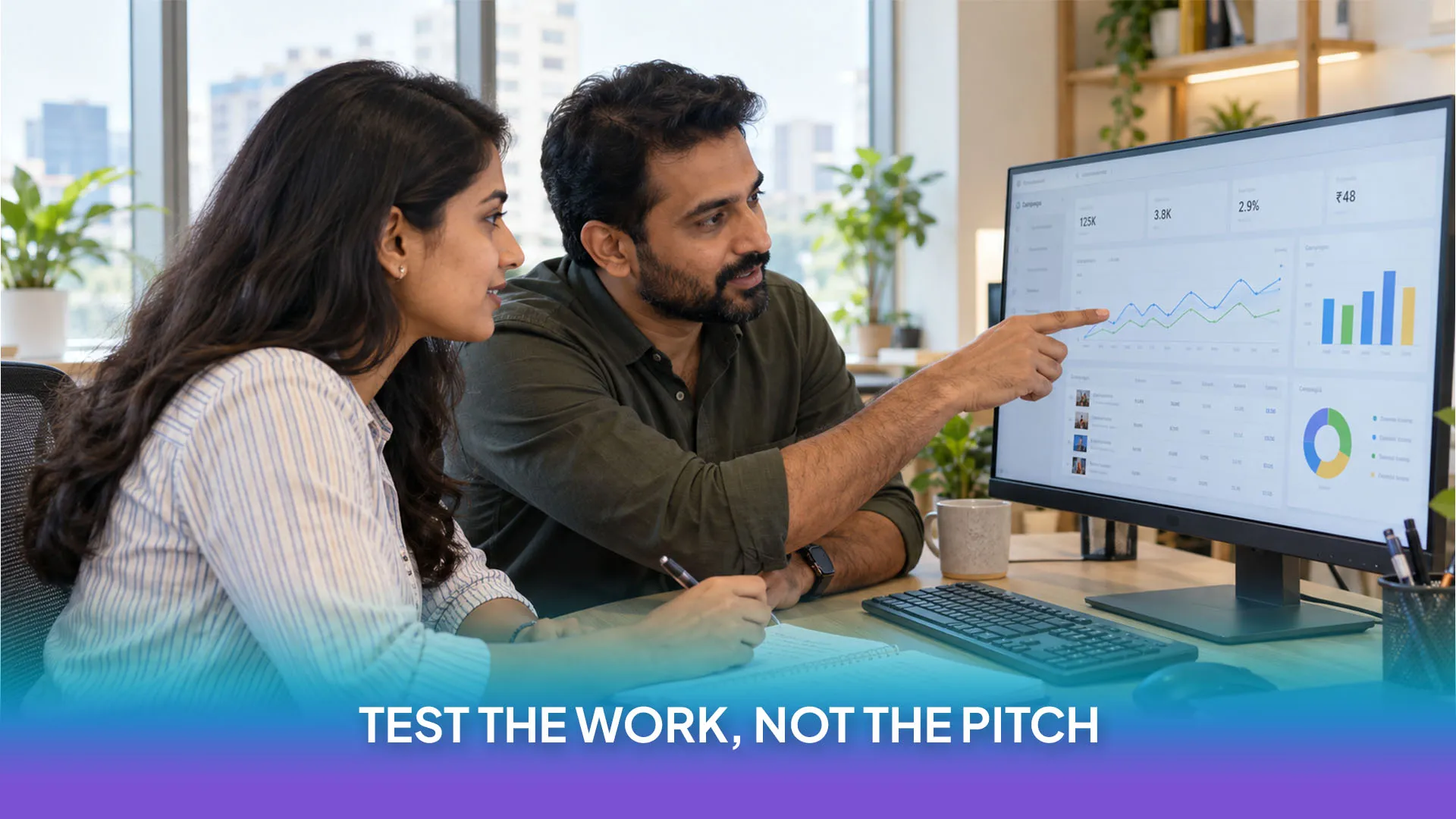
So swap one interview round for a small task based on your real business. Hand them your website or ad account and ask what three things they’d fix first. In a few minutes you’ll see how they think, what catches their eye, and what they do when information is missing. Keep it to a couple of hours, and make sure it’s a test, not free work in disguise.
Ask about failures, too. Someone who can walk you through a campaign that flopped, and what they changed afterward, is usually a safer bet than someone with a perfect story. Nobody’s run campaigns for years without a few duds.
When You Can't Judge the Work Yourself
Many founders and HR heads end up hiring a digital marketer for a role they’ve never done themselves. That makes it hard to read a portfolio, check a claim or spot a thin answer. It’s also why digital marketing recruitment so often turns on a gut feeling.
This is where a marketing recruitment agency can earn its fee. A specialist can pressure-test the brief, screen for the exact channels you need and share a realistic view of what your budget buys. We’ve looked at the in-house route against the agency route in our in-house vs agency guide, and at the role of recruiters in our guide on how marketing recruitment agencies help you hire faster.
Good marketing talent acquisition isn’t a single moment at the offer stage. It runs from the brief to the end of the first quarter.
A simpler way to run digital marketing hiring
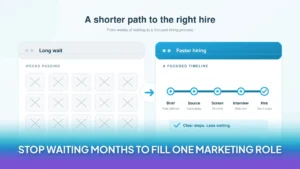
Here’s the whole thing in a nutshell. Pick one or two outcomes and write the role around them. Put a 30-60-90 day plan on paper. Get tool access sorted before the new person walks in. Use a real piece of work in the interview process. Then check in every week through the first quarter, and at day 30, say plainly what’s working and what isn’t.
That last part matters more than it sounds. Too many hires never get a straight conversation until the day they’re let go.
Conclusion
When digital marketing hires fail, it’s usually not about skills. It’s the setup around the person. The role was vague, nobody set clear targets, tool access came late, the interview tested talking instead of doing, and the 90-day clock ignored how slowly marketing results build.
Fix those, and your next hire starts with a fair shot at the job you actually hired them for.
If you’d like a second pair of eyes on the brief before you start hiring digital marketers, 10X Hiring can help you shape the role and the shortlist. Get in touch before you post the job.
Frequently Asked Questions (FAQs)
Why do new marketing hires so often fail in the first three months?
Most of the time the person isn’t the problem. They walked into a mess. The job was a wish list, nobody had said what a win looked like, it took weeks to get into the ad accounts, and the whole team expected results before marketing could possibly deliver them. Get the brief and the 90-day plan sorted before you start looking. That’s what we’d tell anyone at 10X Hiring, and our guide on the cost of a bad marketing hire shows why it matters.
How long should I wait before expecting results?
Don’t look for big wins at 90 days. Look for signs the engine is starting. Has the audit been done? Is tracking working properly? Are a few tests live? SEO and some other channels take longer, so agree on the timeline together, ideally before you make the offer. Our first 90 days checklist covers what to expect at 30, 60 and 90 days.
What goes in a digital marketing job description?
A lot less than you’d think. Say which one or two results matter most, which channels this person will actually run, what tools they’ll use, roughly what the budget is, and who they report to. Then cut everything else. If you’d like a second opinion, 10X Hiring can look it over before it goes live through our job description review. You can also start from our digital marketing job description template.
Is it worth using a recruitment agency for marketing roles?
It can be, especially if you’re short on time or nobody on your team can really judge marketing skills. A specialist knows what to look for in the channels you care about, and 10X Hiring will review your brief and shortlist through a marketing lens before any interviews happen. See how our digital marketing recruitment service in Bangalore works, or talk to our team about your open roles.
How do I avoid hiring the wrong person?
Don’t trust the interview alone. Give candidates a small, real task, and when you call references, ask about specific results instead of general impressions. Write the 90-day goals down, have their logins ready on day one, and check in every week for the first quarter. Problems are much easier to fix when you spot them early. Our candidate screening process and marketing interview questions can help you build a fair, repeatable process.
Search

Hiring Marketing Specialists vs Generalists: The ₹10 Lakh Mistake Agencies Keep Making
You won the client with a strong pitch. Six months later, they’re asking why their ad costs keep climbing, and nobody can explain it clearly. Then comes the email you
Digital Marketing Hiring: Why New Hires Fail in 90 Days (And It’s Rarely About Skills)
You interviewed well. The candidate had the right tools on their CV, a decent portfolio and a calm answer for every question. Three months later, they’re gone, or you’re quietly
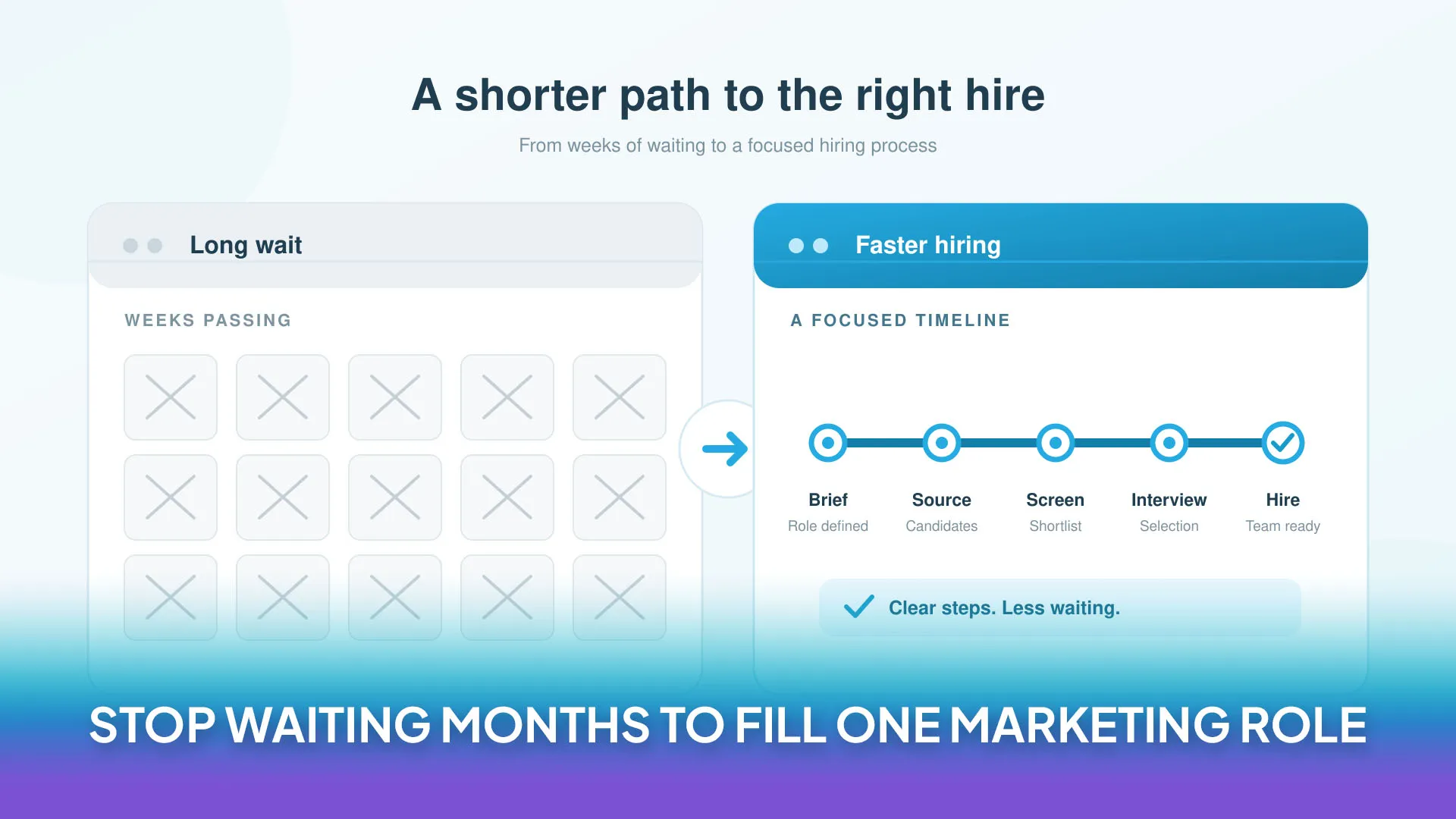
How Marketing Recruitment Agencies Help You Hire Top Talent Faster
Introduction Why does hiring a good marketer sometimes take longer than launching an entire campaign? Why do the strongest candidates disappear before the interview process is complete? And what does

In-House Marketing Team vs Agency: Which One Actually Grows Your Business?
Introduction “Do you build out your own marketing team, or just hand it over to an agency that’s already been through this a hundred times?” And is in-house really the

Digital Marketing Internship Guide to Get Hired in 2026
The Internship Nobody Tells You About Here is something most career guides skip over: the digital marketing internship you land in 2026 will not look like the ones from five