






Are you stuck in the same role, wondering why promotions keep passing you by? Do you feel like you’re working hard but not moving forward? Here’s the truth — hard work isn’t enough. You need a clear career development plan that aligns your goals, skills, and actions with the path to promotion. The good news? You can take control of your growth starting today. In this blog, we’ll walk you through how to build a career development plan that doesn’t just sit in a folder — it works, it motivates, and yes, it gets you promoted.
What Is a Career Development Plan?
A career development plan is your personal roadmap to success. It outlines where you are, where you want to go, and how you’re going to get there. This structured plan helps you set professional goals, identify the skills you need to achieve them, and create a timeline to track your progress.
Whether you’re aiming for a leadership role, a salary increase, or a complete career shift, a well-thought-out career development plan will guide your journey. It’s not just a document — it’s a living strategy that grows with you. Think of it as your career growth strategy, designed to make your efforts intentional and goal-driven, not just reactive.
Why You Need a Career Development Plan to Get Promoted
- Direction Beats Intention – Without direction, you’re simply working — not progressing. A career development plan gives you clarity on what you want and how to achieve it. It connects your daily tasks to long-term goals, which is what managers look for in promotion-ready employees.
- Shows You Take Ownership – When you build your own career development plan, you show initiative. Leaders promote people who take control of their own growth. By planning ahead, you prove that you’re proactive, committed, and not waiting around for someone to push you forward.
- Improves Your Skill Set – Your path to promotion likely involves skills you don’t fully have — yet. A career development plan helps you identify those gaps and focus on acquiring what’s needed. It aligns perfectly with your professional development plan and turns vague improvement goals into measurable steps.
- Gives You Leverage in Reviews – Walking into a performance review with a documented career development plan changes the game. You have proof of growth, effort, and strategy. It makes your case for promotion stronger and more compelling, backed by real progress.
- Boosts Motivation and Confidence – When you have a clear plan, you feel more motivated and confident. You stop questioning your path and start acting with purpose. The benefits of having a career development plan go beyond promotions — they help you feel in control of your journey.
Key Elements of a Successful Career Development Plan
1. Clear Career Goals
You can’t move forward if you don’t know where you’re going. The first step in building your career development plan is to define clear, realistic goals. Ask yourself: What role do I want next? Where do I see myself in 2, 5, or 10 years? Use these answers to shape your objectives. This is the foundation of your career growth strategy. Your goals should align with your values, interests, and strengths, and be measurable so you can track your progress. Without strong goals, even the best career development plan will lead nowhere.
2. Skills Gap Analysis
Once your goals are clear, it’s time to figure out what’s missing. A career development plan requires a detailed skills gap analysis. Compare where you are now to where you want to be. What skills, certifications, or experiences are you lacking? This honest evaluation helps you focus your learning efforts. It’s also the perfect way to align your professional development plan with your future role. Instead of trying to improve everything at once, target the areas that directly impact your path to promotion.
3. Action Plan with Timelines
A dream without a deadline is just a wish. Your career development plan needs an action plan that turns goals into steps — with timelines. Break big goals into smaller tasks. If you want to lead a team, your first step might be leading a project. Add deadlines, milestones, and check-ins. Timelines keep you accountable and show your progress over time. One of the key benefits of having a career development plan is knowing what to do next. Get in touch with us today for Recruitment process outsourcing in India!
4. Resources and Support
You don’t have to do this alone. A strong career development plan includes identifying the resources and people who can help you grow. This might be a mentor, a training program, an online course, or even your manager. Having the right support system can accelerate your growth and make your career growth strategy more effective. Don’t be afraid to ask for help — your career is worth it.
5. Progress Tracking and Review
What gets measured, gets improved. You should regularly track your progress to see what’s working and what needs adjustment. A career development plan is a living document — it grows with you. Check in monthly or quarterly, adjust timelines, and update your action plan as your goals evolve. Progress tracking helps you stay motivated and ensures your plan remains relevant over time. It also prepares you for performance reviews or promotion discussions with solid data.
Step-by-Step: How to Build Your Career Development Plan
- Define Your Career Goals – Clarify where you want to go in your career. Write down your short- and long-term goals and make them as specific as possible. This gives your career development plan direction and focus.
- Identify Your Skills Gap – Compare your current skillset with the skills needed for your target role. This analysis forms the foundation of your professional development plan and tells you what to work on.
- Create an Action Plan – Break down your goals into actionable steps with deadlines. A solid career development plan includes what you’ll do, when, and how — from courses to projects.
- Seek Support and Resources – Reach out to mentors, take relevant courses, and use tools that support your growth. You’ll move faster with the right help along your career growth strategy.
- Track Progress Regularly – Review your career development plan often. Adjust timelines, celebrate milestones, and reflect on what’s working. This keeps your momentum strong and your focus sharp.
Conclusion
Building a career development plan is one of the smartest moves you can make for your future. It helps you take charge of your growth, close skill gaps, and move closer to the promotion you deserve. Whether you’re just starting out or aiming for the next level, a focused, flexible, and actionable plan will get you there.
At 10X Hiring, a leading recruitment agency in India, our mission is to revolutionize the recruitment landscape and make the hiring process smoother for you. We take pride in being your trusted partner in the journey to build a team of top-tier professionals. With a strong focus on Design hiring, we offer a specialized approach to ensure you get the best-fit candidates who align with your goals and culture.
Whether you’re a startup just getting off the ground, an established company scaling fast, or looking to fill key roles with precision — we’ve got you covered. Our recruitment and staffing solutions are built to help you hire smarter and faster.
Frequently Asked Questions (FAQs)
1. What is a career development plan?
A career development plan is a structured roadmap that outlines your career goals and the steps needed to achieve them. It includes skills to develop, learning strategies, and timelines to help guide and track your professional growth over time.
2. What should be included in a career development plan?
A strong career development plan should include career goals, current skills, skill gaps, learning opportunities, action steps, and progress timelines. It should be realistic, flexible, and aligned with both your personal aspirations and the expectations of your industry or role.
3. Why is career planning important?
Career planning gives you direction, helps you set realistic goals, and keeps you focused on continuous growth. It boosts your motivation, improves job satisfaction, and increases your chances of promotion or transition into your desired career path or role.
4. How can a company help with career development?
Companies can support career development by offering training programs, mentorship, performance feedback, internal mobility, and career coaching. Providing clear growth paths and resources helps employees build their future within the organization while improving retention and engagement.
5. How do I create a personal career development plan?
Start by setting clear career goals, assessing your current skills, identifying gaps, and choosing ways to learn or improve. Create a timeline, set check-in points, and review progress regularly. Stay flexible and adjust the plan as your career evolves.
Search

Hiring Marketing Specialists vs Generalists: The ₹10 Lakh Mistake Agencies Keep Making
You won the client with a strong pitch. Six months later, they’re asking why their ad costs keep climbing, and nobody can explain it clearly. Then comes the email you
Digital Marketing Hiring: Why New Hires Fail in 90 Days (And It’s Rarely About Skills)
You interviewed well. The candidate had the right tools on their CV, a decent portfolio and a calm answer for every question. Three months later, they’re gone, or you’re quietly
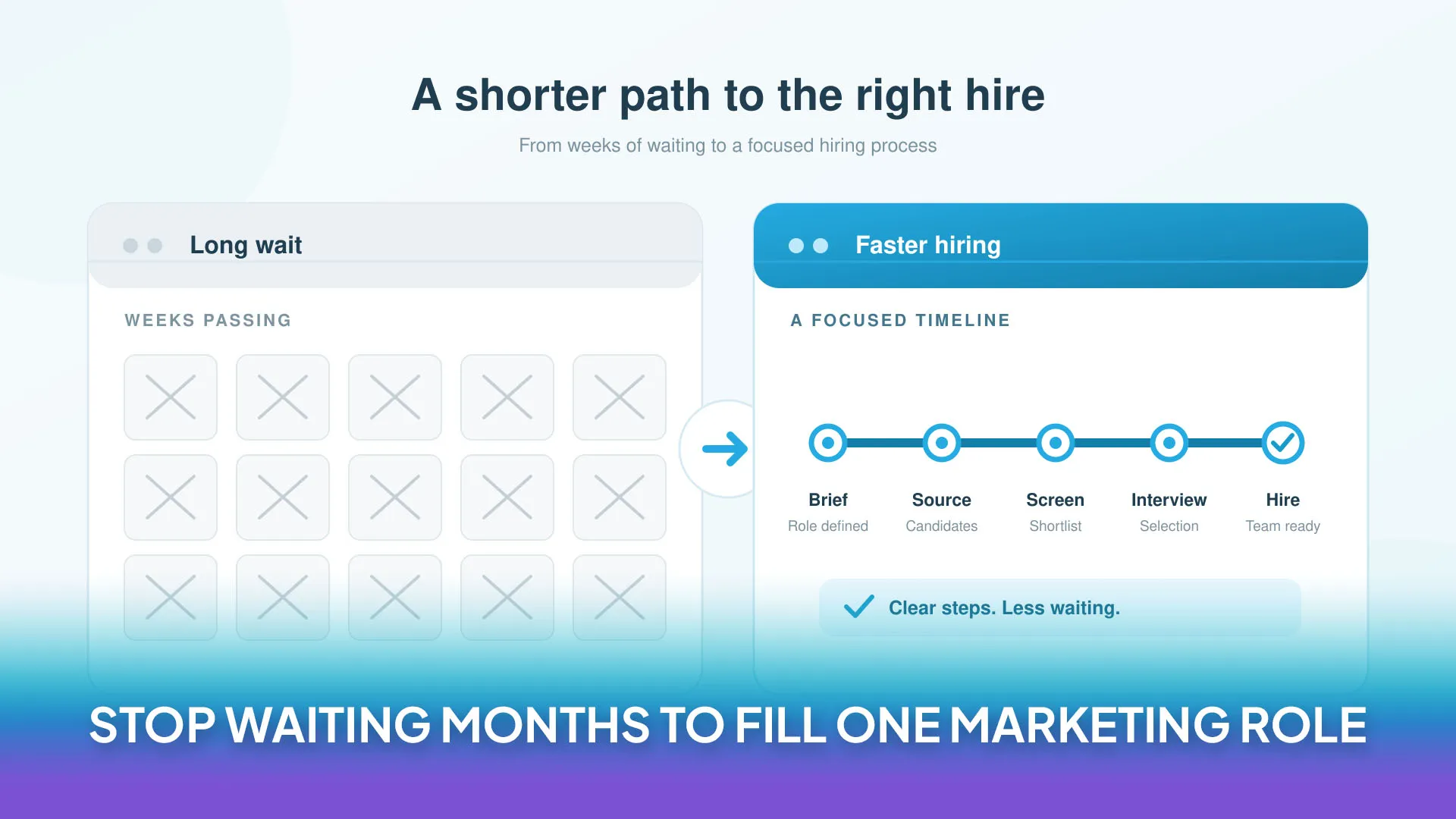
How Marketing Recruitment Agencies Help You Hire Top Talent Faster
Introduction Why does hiring a good marketer sometimes take longer than launching an entire campaign? Why do the strongest candidates disappear before the interview process is complete? And what does

In-House Marketing Team vs Agency: Which One Actually Grows Your Business?
Introduction “Do you build out your own marketing team, or just hand it over to an agency that’s already been through this a hundred times?” And is in-house really the

Digital Marketing Internship Guide to Get Hired in 2026
The Internship Nobody Tells You About Here is something most career guides skip over: the digital marketing internship you land in 2026 will not look like the ones from five