

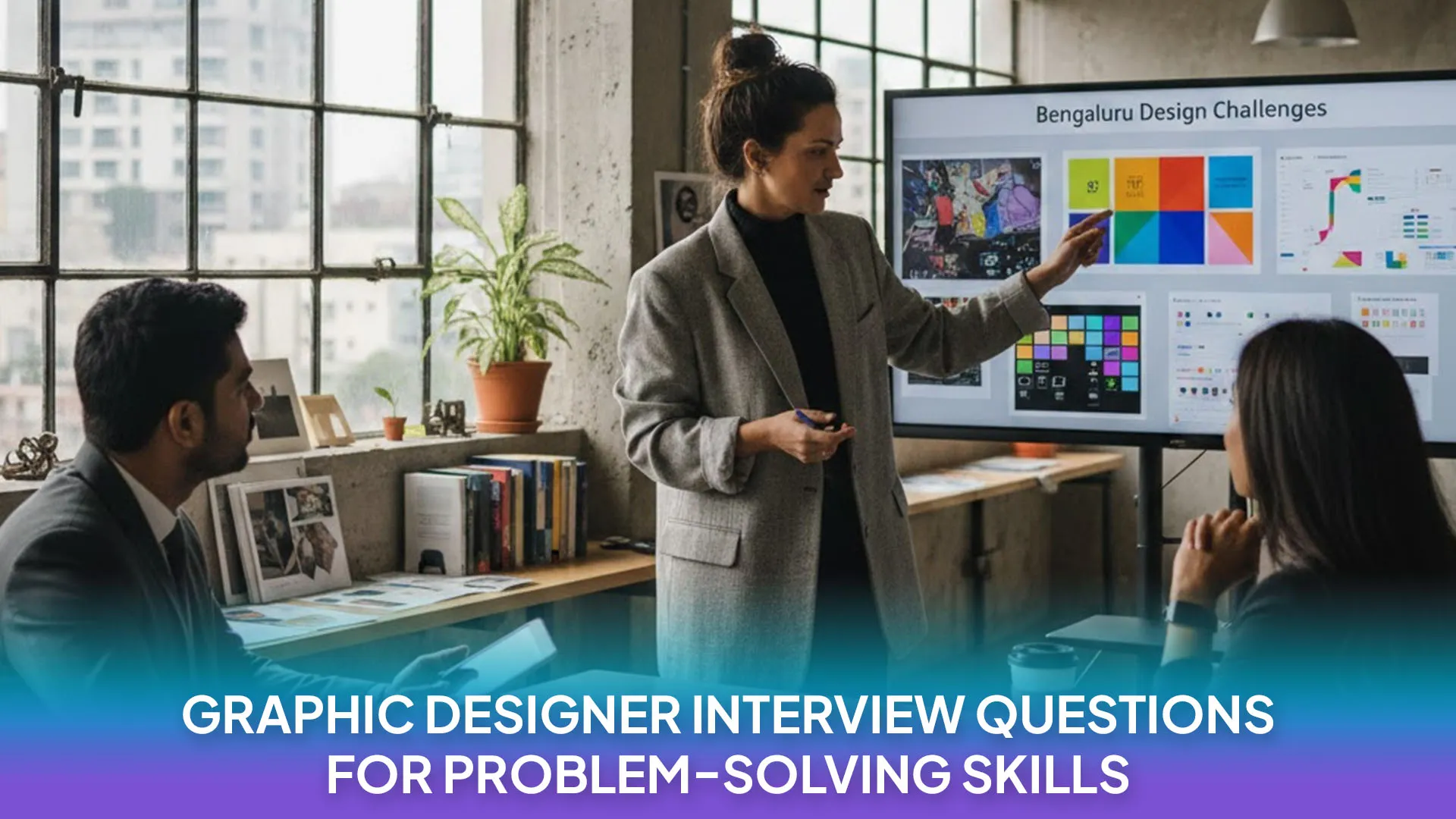
Hiring graphic designers today goes far beyond evaluating portfolios or checking technical software expertise. What truly differentiates high-performing designers is their ability to think critically, adapt creatively, and solve visual problems under real-world constraints. That’s why graphic designer interview questions focused on problem-solving have become essential in modern hiring strategies.
We’ve seen that companies that rely only on visual output often struggle with misalignment, excessive revisions, and slow execution. In contrast, organisations that structure their graphic designer interview questions around thinking, reasoning, and adaptability consistently hire designers who create long-term value. By focusing on problem-solving, businesses gain deeper insight into how designers approach challenges, collaborate with teams, and translate ideas into impactful visuals.
Why Problem-Solving Skills Are Critical in Graphic Design Roles
Graphic design today plays a strategic role in branding, marketing, user experience, and business communication. Designers are expected to solve communication challenges visually, often within tight timelines and evolving requirements. This makes graphic design problem-solving skills a core competency rather than a secondary trait.
When we evaluate hiring outcomes, we notice that designers with strong problem-solving abilities handle ambiguity better, require less rework, and align more effectively with business goals. These qualities become evident when graphic designer interview questions are structured to explore decision-making rather than just execution.
Strong problem-solving in design supports:
- Clear communication of complex ideas
- Faster project turnaround with fewer revisions
- Better collaboration with marketing, product, and leadership teams
- Consistent alignment with brand and user expectations
This is why modern graphic designer interview questions must focus on how designers think, not just what they create.
Understanding Design Thinking in Graphic Design Hiring
Design thinking in graphic design reflects a structured approach to understanding problems, exploring solutions, and refining outcomes. Designers who follow this mindset prioritise users, context, and purpose over personal preference.
Through well-planned graphic designer interview questions, recruiters can assess how candidates research problems, interpret briefs, and refine concepts based on feedback. Designers who apply design thinking explain their decisions clearly and connect visuals to objectives.
Key indicators of strong design thinking include:
- User-focused problem analysis
- Logical progression from concept to execution
- Willingness to iterate and refine ideas
- Clear justification for design choices
By embedding design thinking in graphic design evaluation, companies improve the quality and consistency of their hiring decisions.
Creative Problem-Solving for Designers in Real Work Environments
Design challenges rarely come with fixed answers. That’s where creative problem-solving for designers becomes essential. Designers must balance creativity with constraints such as brand guidelines, timelines, budgets, and stakeholder expectations.
We’ve observed that designers who excel in creative problem-solving remain flexible without losing clarity. They approach constraints as opportunities rather than obstacles. These qualities emerge naturally when graphic designer interview questions explore adaptability and solution-building approaches.
Creative problem-solving skills often reflect:
- Ability to generate multiple solutions
- Openness to feedback and iteration
- Confidence in revising concepts without ego
- Strategic thinking beyond aesthetics
Evaluating creative problem-solving for designers helps employers identify professionals who can consistently deliver value in dynamic environments.
Evaluating Visual Problem-Solving Techniques
Design is ultimately a visual solution to a communication problem. Strong designers use visual problem-solving techniques to simplify information, guide attention, and influence user behaviour.
During hiring, graphic designer interview questions should reveal how candidates use layout, typography, colour, and hierarchy to solve visual challenges. Designers who think visually explain how their choices improve clarity, usability, and impact.
Effective visual problem-solving includes:
- Clear visual hierarchy for readability
- Strategic use of typography and spacing
- Colour choices that support messaging and emotion
- Layout decisions driven by user behaviour
Designers who master visual problem-solving techniques contribute directly to better user experiences and stronger brand communication.
Collaboration and Stakeholder Problem-Solving in Design Roles
Graphic designers work closely with marketers, developers, product managers, and clients. Problem-solving in these environments often depends on communication and collaboration as much as creativity.
Well-structured graphic designer interview questions help evaluate how candidates handle feedback, manage differing opinions, and align with non-design stakeholders. Designers with strong collaboration skills adapt their solutions without compromising design integrity.
Key collaboration-driven problem-solving traits include:
- Clear communication of design rationale
- Ability to translate visual ideas into business language
- Constructive response to feedback
- Alignment with shared goals and timelines
These traits are essential components of a thorough graphic designer skills assessment.
Adaptability and Continuous Learning as Problem-Solving Strengths
The design industry evolves rapidly with new tools, platforms, and expectations. Designers who adapt quickly and continue learning are better equipped to solve future challenges.
We’ve found that adaptability consistently emerges as a strong indicator of problem-solving potential during graphic designer interview questions. Designers who actively update their skills remain relevant and contribute more strategically over time.
Adaptability in design roles is reflected through:
- Willingness to learn new tools and workflows
- Openness to evolving design trends
- Ability to adjust strategies based on results
- Continuous improvement mindset
Adaptable designers strengthen teams and reduce long-term hiring risks.
Conclusion
Hiring great designers isn’t about finding the most visually impressive portfolio; it’s about identifying professionals who can think, adapt, and solve problems consistently. Well-structured graphic designer interview questions help companies uncover the mindset, skills, and approach that drive long-term success.
At 10X Hiring, we help businesses design hiring frameworks built around real capabilities. By focusing on graphic designer interview questions that assess problem-solving, collaboration, and adaptability, we enable organizations to hire graphic designers who create impact, scale with teams, and grow alongside the business.
Frequently Asked Questions (FAQs)
How do graphic designer interview questions reveal real problem-solving skills?
Graphic designer interview questions reveal problem-solving skills by exploring how candidates analyse briefs, handle constraints, justify design decisions, and adapt solutions based on feedback, deadlines, and real-world project challenges.
Why is creative problem-solving essential for modern graphic designers?
Creative problem-solving is essential because modern designers must balance creativity with brand goals, user needs, and technical limitations while delivering effective visual solutions in fast-changing, collaborative environments.
What design challenges best test a graphic designer’s thinking process?
Challenges involving unclear briefs, tight deadlines, brand restrictions, usability conflicts, or multiple stakeholder inputs best test a graphic designer’s thinking process and their ability to prioritise, adapt, and innovate.
How do graphic designers solve client, brand, and usability conflicts?
Graphic designers solve these conflicts by aligning design choices with user needs, business objectives, and brand guidelines while communicating clearly and iterating designs based on feedback and performance insights.
What problem-solving skills do employers look for in graphic designers?
Employers look for analytical thinking, adaptability, visual problem-solving, communication skills, collaboration ability, and the capacity to make informed design decisions under constraints and evolving project requirements.
Search

Digital Marketing Internship Guide to Get Hired in 2026
The Internship Nobody Tells You About Here is something most career guides skip over: the digital marketing internship you land in 2026 will not look like the ones from five
Graphic Design Portfolio for Students to Get Hired Faster
Why Your Portfolio Matters More Than Your Degree? Let’s be honest — in the design world, nobody is hiring a piece of paper. They are hiring your eye, your thinking,
Top Digital Marketing Skills Recruiters Look for in 2026
The digital marketing landscape isn’t just evolving—it’s accelerating at a pace where yesterday’s strategies quickly become outdated. Today, recruiters are no longer impressed by basic knowledge alone; they actively look
Digital Marketing Portfolio Tips to Get Hired Faster in 2026
Getting hired in digital marketing today isn’t just about what you know, it’s about what you can prove. Recruiters don’t just scan resumes anymore; they evaluate a strong digital marketing
Graphic Designer Interview Questions for Problem-Solving Skills
Hiring graphic designers today goes far beyond evaluating portfolios or checking technical software expertise. What truly differentiates high-performing designers is their ability to think critically, adapt creatively, and solve visual